Shabbir Neuro Care Center

Shabbir Neuro Care Center

شبیر نیورو کیئر سنٹر
Neurophysician
Neurophysician
Shabbir Neuro Care Center
Home Medical Blogs Case Studies & Research Gallery Careers Contact Us Portal Login

Ali Ahmed Khan Hospital Toba Road Jhang-Punjab-Pakistan

Neurology, Awareness, Healthcare, Health Education

World Stroke Day 29 Oct 2026: Every Minute Counts — Recognize Stroke and Save Lives

By Dr. Ghulam Shabbir Malik

Published on October 29, 2026 • 2 min read

World Stroke Day 29 Oct 2026: Every Minute Counts — Recognize Stroke and Save Lives
Click to view full image

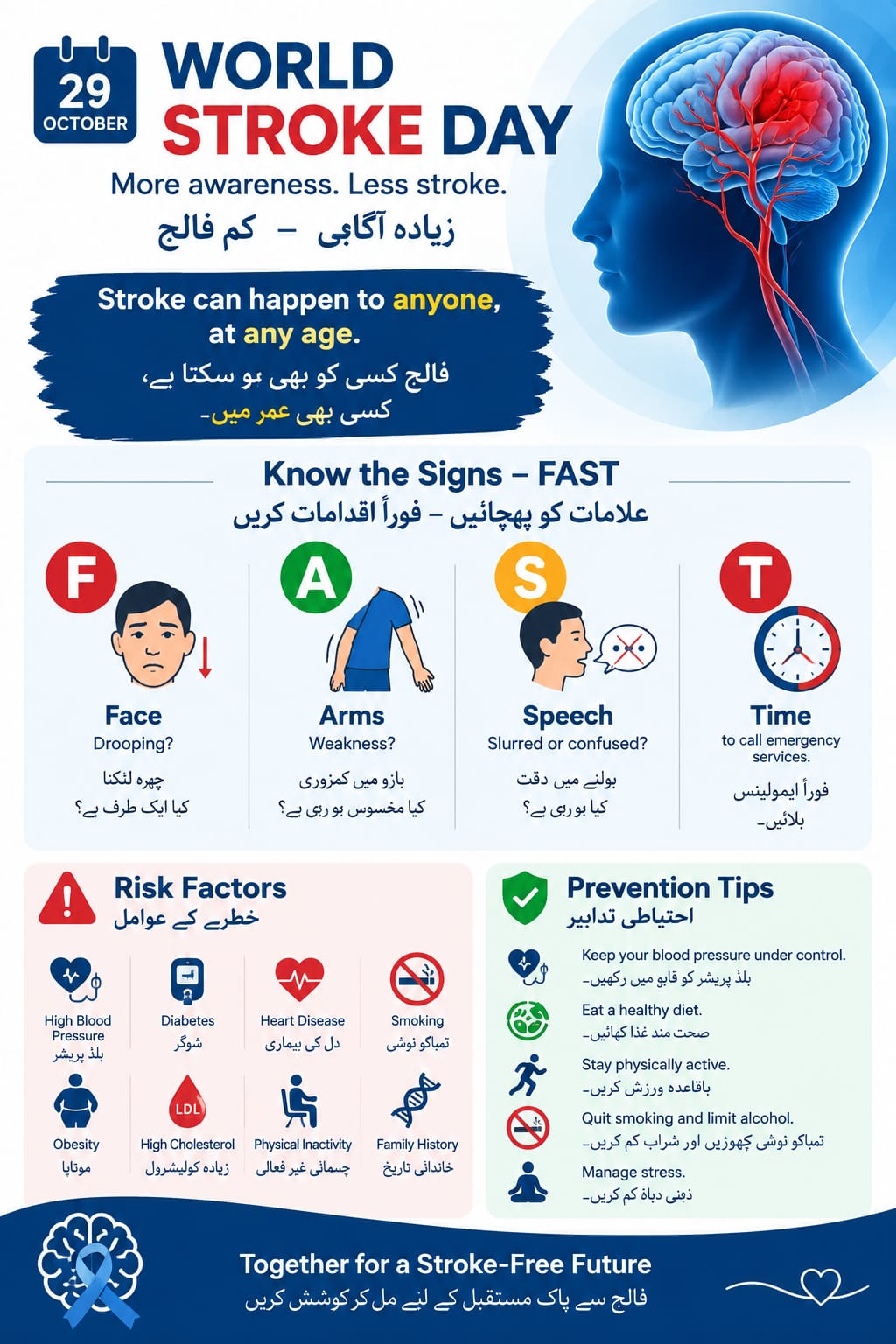
World Stroke Day 2026: Every Minute Counts

World Stroke Day is observed every year on October 29 to raise awareness about stroke prevention, early recognition, emergency treatment, and recovery. The 2026 awareness message, “Every Minute Counts,” highlights the importance of acting quickly when stroke symptoms appear.

What Is a Stroke?

A stroke occurs when the blood supply to part of the brain is interrupted or when a blood vessel in the brain ruptures. Without adequate oxygen and nutrients, brain cells can become damaged. A stroke is a medical emergency that requires immediate medical attention.

Recognize Stroke Symptoms: Act FAST

  • F — Face Drooping: One side of the face may droop or feel numb. Ask the person to smile.
  • A — Arm Weakness: One arm may feel weak or numb, or drift downward when both arms are raised.
  • S — Speech Difficulty: Speech may become slurred, unclear, or difficult to understand.
  • T — Time to Act: Call your local emergency service immediately if any of these symptoms appear.

Other symptoms may include sudden loss of balance, dizziness, vision problems, or a severe unexplained headache. Note the time symptoms began. Do not wait for symptoms to disappear, even if they improve after a few minutes.

Common Risk Factors for Stroke

  • High blood pressure
  • Diabetes and high cholesterol
  • Smoking and tobacco use
  • Physical inactivity and unhealthy eating habits
  • Heart conditions, including atrial fibrillation
  • Increasing age and family history of stroke

How Can You Reduce Your Risk?

Many stroke risk factors can be managed through healthy habits and appropriate medical care.

  • Monitor your blood pressure regularly.
  • Manage diabetes and cholesterol with professional medical guidance.
  • Eat a balanced diet rich in vegetables, fruits, and whole grains.
  • Stay physically active according to your abilities and medical advice.
  • Avoid smoking and tobacco products.
  • Take prescribed medicines as directed by your healthcare professional.
  • Attend regular medical check-ups and discuss your individual risk factors with your doctor.

Stroke Treatment and Recovery

Stroke treatment depends on the type of stroke, the affected area of the brain, and how quickly medical care begins. Some patients may benefit from treatments that restore blood flow, while others require different emergency interventions.

Recovery may involve physiotherapy, occupational therapy, speech and language therapy, and support from family members and healthcare professionals. Rehabilitation needs vary from person to person.

Our Message on World Stroke Day

This World Stroke Day, share the warning signs of stroke with your family and community. Recognizing symptoms and seeking emergency care without delay can save lives and reduce the risk of disability.

Recognize the signs. Act FAST. Every minute counts.


Medical Disclaimer: This article is intended for general health education and awareness only. It does not replace professional medical advice, diagnosis, or treatment. If you suspect a stroke, seek emergency medical assistance immediately.

Chat on WhatsApp